
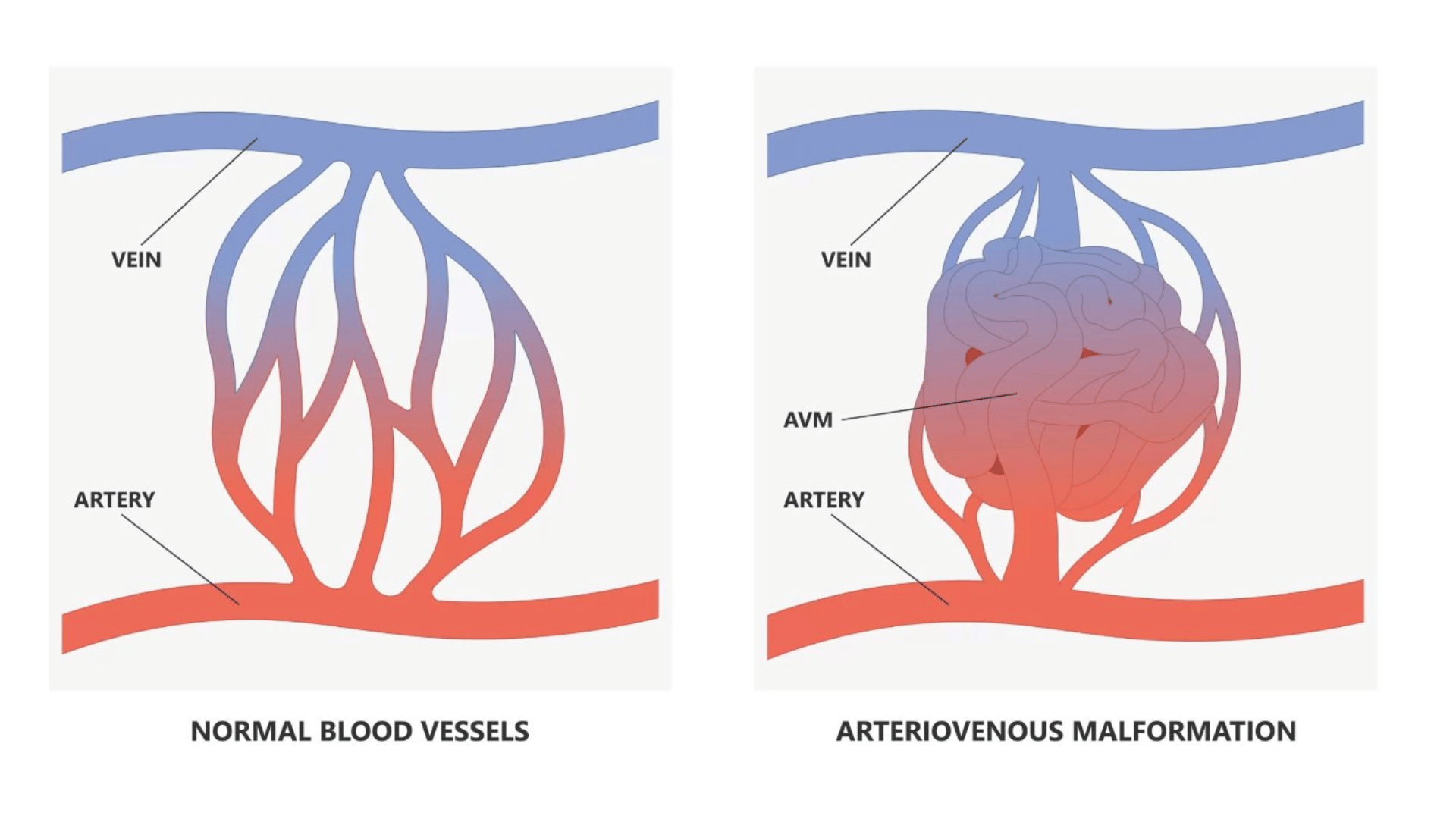
What is a Vascular Malformation?
Vascular malformations are abnormal clusters of blood vessels that develop during fetal growth and are present at birth. These can involve arteries, veins, capillaries, or lymphatic vessels and may grow over time. Unlike vascular tumors (like hemangiomas), vascular malformations do not regress and often require medical intervention.
Symptoms of a Vascular Malformation
- Visible swelling or discoloration of skin (often bluish or red)
- Pain, tenderness, or warmth in the area
- Bleeding or ulceration (especially with superficial lesions)
- Functional issues depending on location (e.g., difficulty breathing, movement restrictions)
- Seizures or neurological symptoms (if in the brain)
- Cosmetic or structural deformities
Potential Causes of a Vascular Malformation
- Congenital (present at birth): Caused by developmental errors in blood vessel formation
- Genetic mutations: Some cases are linked to inherited conditions (e.g., hereditary hemorrhagic telangiectasia, CLOVES syndrome)
- Not caused by trauma or injury, although trauma may make them more noticeable
Who is at Risk for a Vascular Malformation?
- Newborns and children (typically present at or shortly after birth)
- Individuals with a family history of vascular syndromes
- Those with genetic or developmental syndromes linked to vascular anomalies
Risk Reduction or Preventative Measures for a Vascular Malformation
- Vascular malformations cannot be prevented, but early diagnosis and management reduce complications
- Genetic counseling may help in familial cases
- Avoiding trauma to the area may reduce the risk of bleeding
- Monitoring for growth or changes in known lesions
Potential Course of Treatment for a Vascular Malformation
- Observation: For small, asymptomatic lesions
- Laser therapy: For superficial or cosmetic issues
- Sclerotherapy: Injection of agents to shrink abnormal vessels
- Surgical removal: In accessible or problematic cases
- Embolization or endovascular procedures: To block off abnormal blood flow
- Medication: In some cases, drugs like sirolimus may help control growth or symptoms
CareMVP MRI Role in Diagnosing a Vascular Malformation
At CareMVP, we assist by:
- Recognizing signs early, especially in newborns and children
- Coordinating diagnostic imaging, such as ultrasound, MRI, or angiography
- Referring to vascular specialists (e.g., interventional radiology, dermatology, or surgery)
- Monitoring growth and symptoms over time
- Educating families on care, treatment options, and when to seek urgent attention