
Full-body MRI scan

Advanced proactive care,
head to pelvis.

Experience the power of early detection with our comprehensive Full-Body scans, offering advanced MRI and diagnostic imaging services for proactive health management. From cancer screening to muscle, bone, and organ health, our scans provide vital insights for personalized care, empowering patients to catch health issues before they become serious. Prioritize your well-being with our state-of-the-art technology and expert screenings.
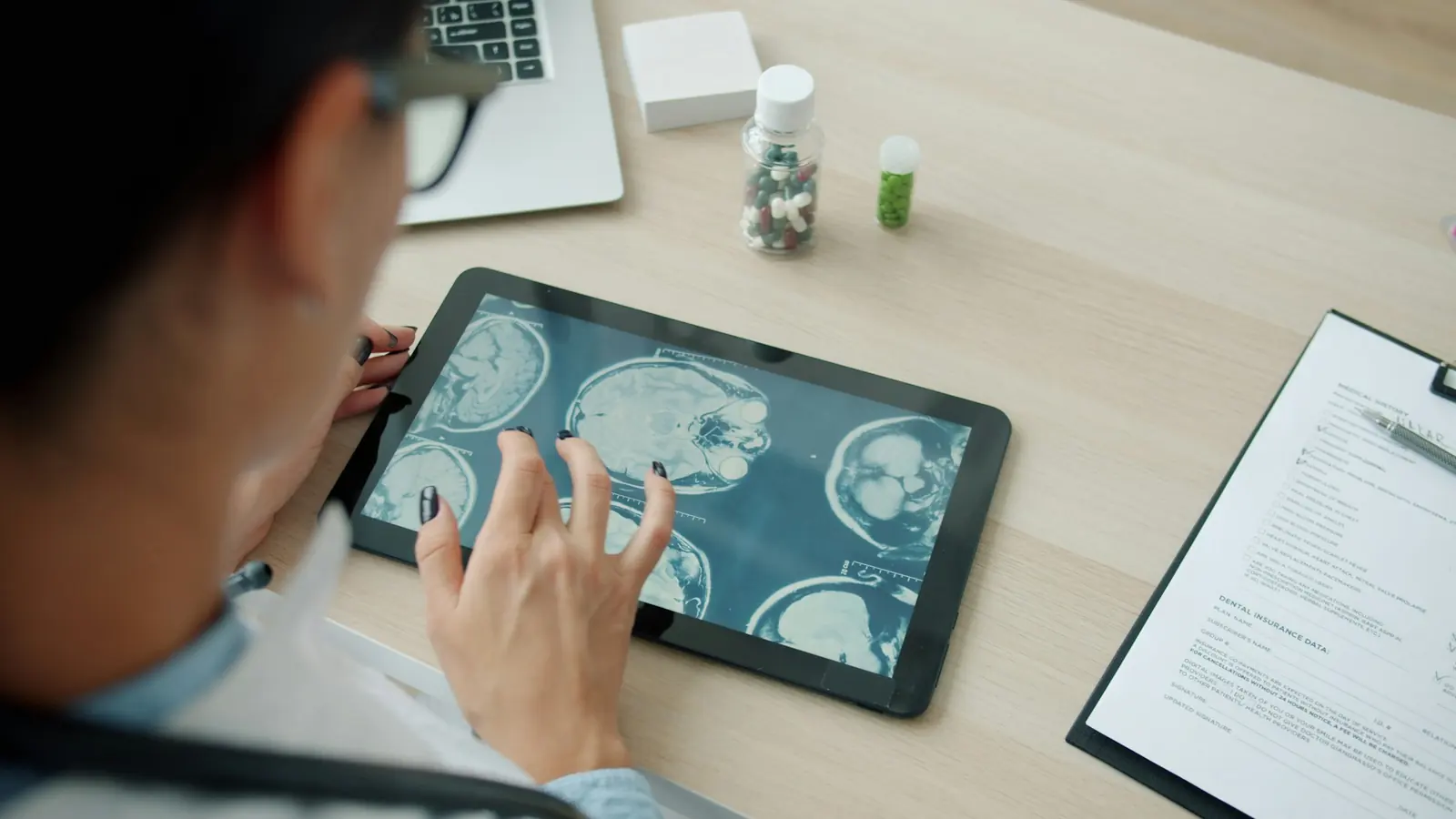
A physician reviews brain MRI images on a tablet
  • 0Radiation from the MRI
  • No dyeContrast-free protocol
  • ~1 hrIn a wide-bore scanner
  • 3–5 daysTo your report

THE TECHNOLOGY

Cutting-edge technology
for better health insights.

01

Ultra-High-Field Strength

Our MRI systems operate at higher field strengths, offering superior image resolution and clarity.

02

Faster Scan Times

Innovative software algorithms significantly reduce scan times, enhancing patient comfort and experience.

03

Advanced Imaging Capabilities

Our scanners provide detailed images of soft tissues, neurological structures, and musculoskeletal anatomy with unprecedented clarity.

04

Enhanced Patient Comfort

Designed with patient well-being in mind, our MRI machines feature wider bores and noise-reduction technology.

WHY CAREMVP

The best in care and technology.

Quality matters

Not all Full-body MRI scans are created equal. Thanks to our advanced scanner technology, we acquire thinner slices and higher resolution images than our competitors to provide a highly detailed view of the body’s internal structures. Full-body scans aren’t regulated, so quality varies widely, and weaker images can mean more false positives and anxiety.

Thoughtful reporting

Each CareMVP Full-Body scan is analyzed and carefully reported by fellowship trained radiologists to provide greater clarity, lessen anxiety and reduce unnecessary follow ups.

One-on-one care

A top radiologist will review your images with you and teach along the way during your personalized one on one video session. You will walk away with much greater clarity and knowledge about your body.

A calm lounge with warm wood paneling, a cream sofa, and soft natural light

THE EXPERIENCE

Scan and relax.

Our Full-Body MRI scan is wider and more spacious to help with any anxiety you may have; our technicians are experts in their craft, (and putting you at ease). Unwind to your own music while you scan and get back to your day in less than an hour.

  • Wide-bore scanner with a 70 cm opening
  • Your music, podcast, or a guided meditation
  • Two-way communication and a squeeze ball throughout
  • A companion may stay in the room after a safety check
What to expect

WHAT WE DETECT

Discovering the unseen.

Here are just a few of the 500+ conditions a full-body MRI can reveal, often years before symptoms.

BY BODY SYSTEM

What a full-body MRI can show.

Our cutting-edge approach combines multiparametric techniques and diffusion-weighted imaging to precisely identify cancer and over 500 other conditions in their earliest stages.

The science behind our scans

Digestive System
  • Liver Diseases: The full-body MRI can detect Cirrhosis, liver tumors, and fatty liver.
  • Pancreatic Conditions: The whole body scan can show MRI Pancreatitis, pancreatic tumors.
  • Bowel Disorders: The MRI can show Inflammatory bowel diseases like Crohn’s disease.
  • Gallbladder: The Full-Body Scan can pick up Gallstones
  • Bile duct obstruction – The whole-body MRI shows blockages caused by stones or strictures.
  • Cholecystitis – MRI can reveal inflammation or infection of the gallbladder.
  • Non-alcoholic fatty liver disease (NAFLD) – MRI can detect fat accumulation in the liver before symptoms develop.
  • Liver cirrhosis – MRI identifies early fibrosis and structural changes in the liver.
Respiratory System
  • Lung Diseases: Cancers greater than 10 mm.
  • Mediastinal Tumors: Masses in the area between the lungs.
  • Pulmonary nodules or masses – MRI detects abnormal growths in lung tissue.
  • Pleural effusion – MRI shows excess fluid around the lungs.
  • Interstitial lung disease – MRI identifies fibrosis and scarring patterns.
  • Chest wall tumors – MRI detects masses that extend into or from the thoracic wall.
Cardiovascular System
  • Heart Diseases: Cardiac abnormalities.
  • Atherosclerosis: Plaque buildup in the arteries.
  • Congenital Heart Defects: Structural heart abnormalities.
  • Vascular Diseases: Aneurysms, blockages, and malformations
  • Peripheral artery disease (PAD) – MRI visualizes arterial narrowing in the limbs.
  • Carotid artery stenosis – MRI shows plaque buildup or narrowing in the neck arteries.
  • Deep vein thrombosis (DVT) – MRI can identify clots in major veins.
  • Arteriovenous malformations (AVMs) – MRI detects abnormal connections between arteries and veins.
Neurological System
  • Brain Tumors: MRI identifies Benign and malignant tumors.
  • Stroke: MRI reveals Ischemic (due to a clot) or hemorrhagic (due to bleeding).
  • Multiple Sclerosis: MRI aids in the Detection of plaques in the central nervous system.
  • Alzheimer’s Disease: MRI can detect Changes in brain structure and volume.
  • Parkinson’s Disease: Brain changes associated with Parkinson’s.
  • Epilepsy: Structural abnormalities in the brain.
  • Traumatic Brain Injury: Assessing damage after head trauma.
Multiple Sclerosis
  • MS plaque lesions – MRI identifies demyelinating lesions in the brain and spinal cord.
  • Optic neuritis – MRI can detect inflammation of the optic nerve.
  • Neuromyelitis optica spectrum disorder (NMOSD) – MRI reveals longitudinal spinal cord lesions.
  • Acute disseminated encephalomyelitis (ADEM) – MRI highlights widespread inflammatory brain lesions.
Cancer
  • Carcinoma: Adenocarcinoma, Basal cell carcinoma, Squamous cell carcinoma, Ductal carcinoma in situ (DCIS), Invasive (infiltrating) ductal carcinoma.
  • Sarcoma: Osteosarcoma or osteogenic sarcoma , Chondrosarcoma, Leiomyosarcoma, Rhabdomyosarcoma, Mesothelial sarcoma or mesothelioma, Fibrosarcoma, Angiosarcoma or hemangioendothelioma, Liposarcoma, Glioma or astrocytoma, Myxosarcoma, Mesenchymous or mixed mesodermal tumor.
  • Myeloma: light chain myeloma, non secretory myeloma, myeloma without symptoms (smouldering myeloma).
  • Leukemia: Myelogenous or granulocytic leukemia, Lymphatic, lymphocytic, or lymphoblastic leukemia, Polycythemia vera or erythremia.
  • Lymphoma: Non-Hodgkin Lymphoma, Hodgkin Lymphoma.
  • Mixed Types: adenosquamous carcinoma, mixed mesodermal tumor, carcinosarcoma, teratocarcinoma.
Musculoskeletal System
  • Arthritis: Joint inflammation and damage.
  • Bone Tumors: Both benign and malignant.
  • Spinal Disk Abnormalities: Herniated or bulging discs.
  • Muscle Disorders: Strains, tears, or other injuries.
Reproductive System
  • Uterine Fibroids: Benign tumors in the uterus.
  • Ovarian Cysts and Tumors: Both benign and malignant.
  • Pelvic Pain: Endometriosis
  • Prostate Abnormalities: Prostate cancer and enlargement.
  • Testicular Disorders: Tumors and other abnormalities.
  • Ovarian endometriomas: MRI detects blood-filled cysts caused by endometrial tissue.
  • Deep infiltrating endometriosis: MRI shows lesions affecting ligaments, bowel, or bladder.
  • Adenomyosis: MRI identifies endometrial tissue invading the uterine muscle wall.
  • Pelvic adhesions: MRI reveals scar tissue caused by chronic inflammation.
Aneurysms
  • Cerebral aneurysms – MRI angiography visualizes bulging or weakened brain vessels.
  • Aortic aneurysms – MRI detects enlargement or thinning of the aortic wall.
  • Renal artery aneurysms – MRI can identify abnormal dilation in the kidney arteries.
  • Splenic artery aneurysms – MRI reveals vascular weakness near the spleen.
Spine Degeneration
  • Degenerative disc disease – MRI shows disc dehydration and structural decline.
  • Spinal stenosis – MRI identifies narrowing of the spinal canal.
  • Herniated discs – MRI detects bulging or ruptured discs.
  • Facet joint arthritis – MRI reveals inflammation and degeneration of vertebral joints.
Pancreatic and Bowel Health
  • Crohn’s disease – MRI visualizes inflammation and thickening of bowel walls.
  • Ulcerative colitis complications – MRI detects severe inflammation or toxic megacolon.
  • Pancreatitis – MRI identifies pancreatic swelling and ductal changes.
  • Small bowel tumors – MRI shows mass lesions and obstruction patterns.
Pituitary, Adrenal, Lymph
  • Pituitary adenomas – MRI visualizes benign tumors affecting hormone production.
  • Adrenal adenomas – MRI detects hormone-secreting adrenal masses.
  • Lymphadenopathy – MRI identifies enlarged lymph nodes due to infection or cancer.
  • Lymphoma – MRI can detect cancer of the lymphatic system across the body.
A couple sit together on a sofa, smiling and waving at a laptop during a video visit

HOW IT WORKS

Six steps.
One clear picture.

  1. 01

    Check eligibility

    Answer a short MRI safety questionnaire when you book, so we can confirm the scan is right for you.

  2. 02

    Scan in comfort

    About an hour in a wide-bore scanner with your own music. No contrast dye, no radiation from the MRI.

  3. 03

    Expert reading

    Fellowship-trained radiologists review every image and write a detailed, clear report.

  4. 04

    Results in 3–5 days

    Your report arrives on your Personal Health Dashboard, written in plain language.

  5. 05

    Talk it through

    A private video consultation with your radiologist, 30 to 60 minutes depending on your package.

  6. 06

    Ongoing support

    We coordinate with your physician on anything that needs follow-up, and check in through the year.

WHY MRI

Advantages of MRI
for full-body screening.

01

Comprehensive health assessment

A full-body MRI offers a thorough and detailed overview of your internal structures, enabling the evaluation of multiple organs and systems in a single session. This can help in the early identification of various conditions.

02

Non-invasive and safe

MRI scans are non-invasive, requiring no incisions or instrument insertions. Unlike CT scans or traditional X-rays, MRIs do not use ionizing radiation, making them safer for repeated use.

03

High resolution and contrast

MRI technology provides high-resolution images with excellent contrast, which are beneficial for evaluating soft tissues. It excels in imaging the brain, spinal cord, nerves, muscles, ligaments, and tendons.

FULL-BODY MRI PACKAGES

Four packages.
One standard of care.

Because a full-body screening is an elective procedure, it is not covered by your insurance. However we are both HSA and FSA approved, allowing you to use funds you’ve set aside for medical expenses to pay for your exam. Every package includes a written report and a private radiologist consultation.

Full-Body

$1,650

A complete head-to-pelvis baseline. About 45 minutes in the scanner.

  • Brain MRI and MRA, plus neck, chest, abdomen & pelvis MRI
  • 30-minute radiologist video consultation
  • Personal Health Dashboard
Choose Full-Body

Full-Body Premium

$2,050

Adds the whole spine. About 60 minutes in the scanner.

  • Everything in Full-Body
  • Cervical, thoracic & lumbar spine MRI
  • 45-minute radiologist video consultation
Choose Full-Body Premium

Full-Body Complete

$2,650

Adds heart and lung CT, plus NeuroQuant brain analysis. About 75 minutes in the scanner.

  • Everything in Full-Body Premium
  • Cardiac calcium score CT
  • Low-dose lung cancer CT
  • NeuroQuant brain volume analysis
  • 60-minute radiologist video consultation
Choose Full-Body Complete

Add a cardiac calcium score CT ($125), a low-dose lung cancer CT ($395) or NeuroQuant brain analysis ($399) to Full-Body or Premium; Complete and Elite include all three. HSA and FSA eligible. Compare every detail

PATIENT REVIEWS

Patients, in their own words.

Read all reviews

“I recently had a full-body scan at CareMVP, and I can confidently say it was one of the best medical experiences I’ve had. From the moment I walked in, the staff was incredibly attentive, kind, and professional. They made sure I felt comfortable every step of the way and answered all my questions with patience and clarity. What really stood out was the level of detail and care from Dr. Newatia…”

Seema S

“I recently visited CareMVP to get an MRI as a preventative step since I have a family history of cancer. I was a little nervous going in, but the entire experience was amazing. The staff was incredibly kind and walked me through every part of the process, which made it feel much less intimidating. The MRI itself was quick, smooth, and not scary at all. Afterward, I went over the results with the…”

Valeriya S

“I’m not a fan of MRIs and I have claustrophobia as well. This place was very supportive of that. The newer machine and music selection as well as the tranquility in the space and of the staff was super helpful.”

Halimah J

Read Align Radiology’s reviews on Google

FAQ

Questions, answered.

See all 50 questions

Does a full-body MRI use radiation or contrast dye?

No. MRI uses magnetic fields and radio waves, not ionizing radiation, and our screening protocol does not use gadolinium contrast. The optional calcium score and lung CT scans do use a low dose of radiation.

What is the brain MRA?

MRA, or magnetic resonance angiography, is part of your brain MRI that images the arteries inside your head. Your radiologist uses it to look for an aneurysm, a narrowed artery or an abnormal tangle of vessels. It is included in every CareMVP full-body MRI, with no radiation and no contrast dye.

How long does the scan take?

About 45 to 75 minutes in the scanner depending on your package. Plan for roughly 90 minutes from check-in to checkout.

I’m claustrophobic. Can I still have the scan?

Many people with mild claustrophobia complete the scan comfortably. Our wide-bore scanner has a larger opening, you can listen to music, talk with the technologist throughout, and take short breaks.

Does it replace my regular screenings?

No. A full-body MRI complements guideline-recommended screening such as mammography, colonoscopy, and Pap testing. It does not replace them.

YOUR NEXT STEP

Know more.
Worry less.

Book your full-body MRI online in about two minutes, or call us and we will help you choose the right package.

Book Your Baseline Call