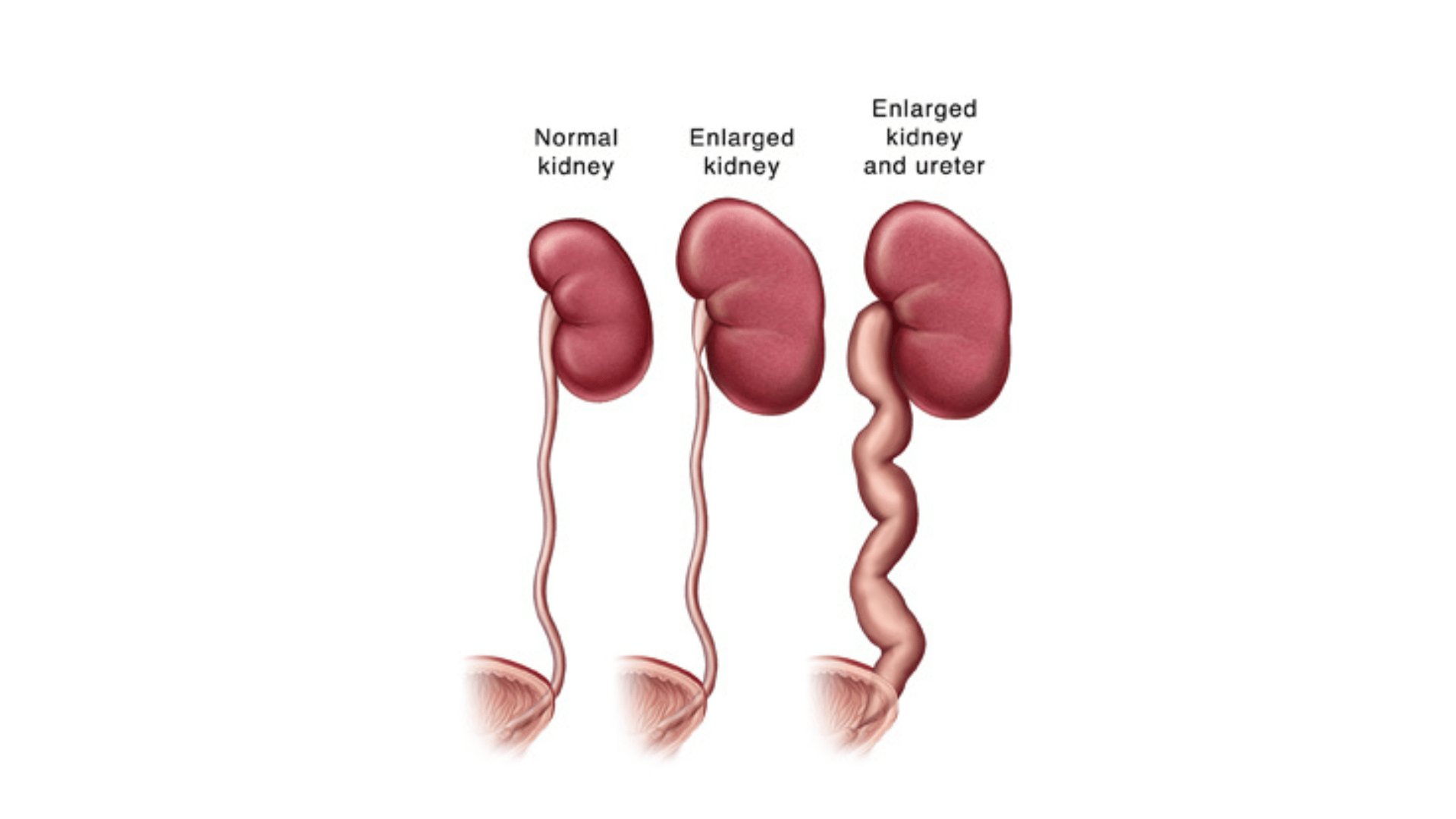
What is an Enlarged Kidney?
An enlarged kidney, or renal enlargement, occurs when one or both kidneys increase in size due to an underlying condition. It’s not a disease itself but a symptom of something affecting kidney function or structure, such as infection, obstruction, cysts, or chronic disease.
Symptoms of an Enlarged Kidney
- Flank or abdominal pain
- Swelling or fullness in the abdomen or side
- Nausea or vomiting
- Changes in urination (e.g., frequency, color, or flow)
- Fever or chills (if infection is present)
- High blood pressure or fatigue
Potential Causes of an Enlarged Kidney
- Hydronephrosis: Swelling from urine backup due to blockage
- Polycystic kidney disease (PKD): Inherited condition causing multiple cysts
- Kidney infection (pyelonephritis)
- Kidney tumors or masses
- Kidney stones blocking urine flow
- Vesicoureteral reflux : Backflow of urine into the kidneys
Who is at Risk for an Enlarged Kidney?
- Individuals with recurrent urinary tract infections or kidney stones
- People with a family history of kidney disease or PKD
- Infants and children with congenital urinary tract abnormalities
- Patients with diabetes or high blood pressure
- Those with autoimmune or metabolic conditions affecting the kidneys
Risk Reduction or Preventative Measures for an Enlarged Kidney
- Staying hydrated to support kidney function
- Treating urinary tract infections promptly
- Managing chronic conditions like hypertension and diabetes
- Avoiding overuse of nephrotoxic medications (e.g., NSAIDs)
- Regular kidney monitoring if at high risk or with known kidney issues
Potential Course of Treatment for an Enlarged Kidney
- Treating the underlying cause: e.g., antibiotics for infection, surgery for obstruction
- Drainage procedures: For severe hydronephrosis or abscess
- Medications: To manage pain, blood pressure, or inflammation
- Dialysis or transplant: In advanced kidney failure
- Monitoring and imaging: To track kidney size and function
CareMVP MRI Role in Diagnosing an Enlarged Kidney
CareMVP supports patients with the following:
- Identifying early signs and symptoms of renal issues
- Ordering appropriate tests, such as ultrasounds, CT scans, and kidney function labs
- Coordinating care with nephrologists or urologists
- Monitoring chronic conditions that may lead to kidney complications
- Educating patients on lifestyle changes and symptom awareness