
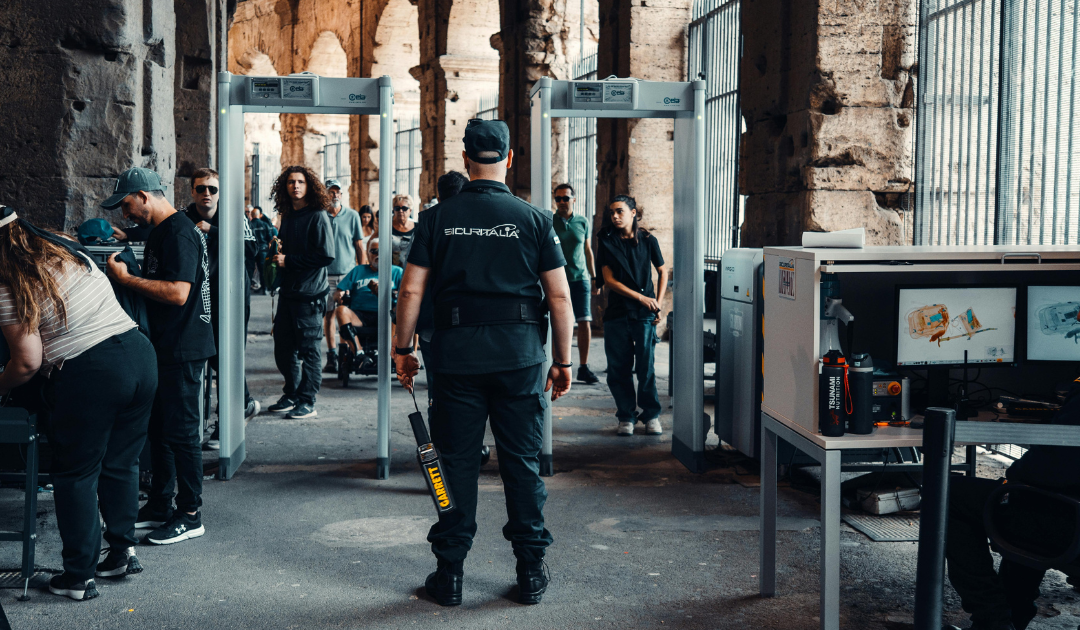
You may have walked through one without giving it much thought, the tall, cylindrical booth at the airport security checkpoint where you stand with your arms raised for a few seconds while the machine quietly scans you from head to toe. That is a millimetre wave (MMW) scanner, one of the most widely deployed full body scanning technologies in the world.
But MMW scanners are no longer just a feature of airport security. The same underlying technology is now being explored in medical settings for everything from detecting skin cancer to monitoring heart rate and breathing without any physical contact. It is a rapidly evolving field with significant implications for both security and healthcare.
In this guide, we explain exactly how MMW scanners work, what they can and cannot detect, how they differ from other scanning technologies, what the research says about their safety, and what the future of MMW technology looks like in medicine.
What Is a Millimetre Wave (MMW) Scanner?
A millimetre wave scanner is a type of full body imaging device that uses electromagnetic waves in the millimetre wavelength range, specifically frequencies between 30 GHz and 300 GHz to create images of the surface of a person’s body and any objects concealed beneath their clothing.
MMW scanners come in two main varieties: active and passive. Active MMW scanners transmit their own millimetre wave energy toward the subject and detect the waves that bounce back. Passive MMW scanners work by detecting the natural millimetre wave energy that all warm objects including the human body emit at room temperature.
The technology used in most airport security checkpoints is active MMW scanning, which provides higher resolution and faster imaging than passive systems. The same active MMW principles are now being adapted and refined for a growing range of medical applications.
How Does an MMW Scanner Work?
Understanding how MMW technology works helps demystify both the security screening experience and its emerging medical uses. Here is a step-by-step breakdown of the process:
Step 1: Emitting Millimetre Waves
An array of antennas inside the scanner emits millimetre wave energy in the direction of the person being scanned. In airport security systems, two rotating transmitters produce waves that sweep around the subject as they stand inside the scanning portal with their arms raised. The entire process takes less than ten seconds.
Step 2: Reflection and Detection
Millimetre waves behave differently when they encounter different materials. They pass easily through most fabrics and synthetic materials including clothing, leather, and many plastics but reflect strongly off the human skin and off dense materials such as metals, liquids, ceramics, and some explosives. When the waves bounce back from the person’s body and any concealed objects, they are captured by receivers on the other side of the scanner.
Step 3: Image Processing
The reflected signals are processed by sophisticated software to build a three-dimensional image of the person’s body surface and anything resting on or near it. In current airport security systems, Automatic Target Recognition (ATR) software processes this data without human review of an actual body image. If the software detects something suspicious, it highlights the approximate location on a generic, standardised body outline displayed on a monitor. If no threat is detected, the screen simply displays the word ‘OK’ no image of the person’s body is shown at all.
What Can an MMW Scanner Detect?
In a security context, an MMW scanner is designed to detect objects concealed beneath clothing, regardless of whether those objects contain metal or not. This is one of its key advantages over traditional metal detectors.
In Security Settings, MMW Scanners Can Detect
- Metallic weapons knives, firearms, and other metal objects
- Non-metallic weapons ceramic blades, plastic explosives, and composite materials that would not trigger a metal detector
- Liquids and gels concealed under clothing
- Drugs or narcotics hidden on the body
- Improvised explosive devices (IEDs) containing non-metallic components
- Medical devices and implants that would otherwise trigger a standard metal detector though these are not threats, the scanner allows staff to identify them quickly
What MMW Scanners Cannot Detect
- Objects hidden inside body cavities MMW waves do not penetrate the body and cannot see internally
- Very thin or flat objects that closely conform to the skin surface, which may not generate a strong enough reflected signal to trigger an alert
- Internal medical conditions, tumors, or diseases in a security context MMW security scanners are surface imaging tools only
MMW Technology in Medicine: An Emerging Frontier
While the general public is most familiar with MMW scanners from airport security, the same electromagnetic principles are now being applied in an exciting and rapidly developing range of medical contexts. Here is what the research currently shows:
1. Skin Cancer Detection
One of the most promising emerging medical applications of MMW technology is in the non-invasive detection of skin cancer. Research published in Scientific Reports demonstrated that high-resolution MMW imaging can distinguish between malignant and benign skin lesions by detecting differences in the dielectric properties essentially, the way tissues interact with electromagnetic waves of cancerous versus healthy skin tissue.
In a study involving 136 skin lesions from 71 patients including melanoma, basal cell carcinoma, and squamous cell carcinoma MMW imaging showed strong potential to differentiate between cancer types and benign lesions. The appeal of this technology is significant: it is non-invasive, causes no discomfort, uses no ionising radiation, and could potentially reduce the number of unnecessary biopsies by helping clinicians identify lesions that genuinely warrant surgical removal.
2. Non-Contact Vital Signs Monitoring
MMW radar technology is being actively developed for the contactless monitoring of vital signs including breathing rate, heart rate, and even blood pressure without any physical sensors being attached to the patient. The technology works by detecting the tiny movements of the chest wall caused by breathing and heartbeat, which create measurable changes in the reflected MMW signal.
This has significant implications for clinical monitoring in intensive care, for the ongoing assessment of elderly or immobile patients, for sleep disorder clinics, and for situations where attaching physical sensors is impractical or uncomfortable. Research published in Nature Scientific Reports confirmed that FMCW (Frequency-Modulated Continuous Wave) MMW radar can accurately extract both breathing and heart rate signals simultaneously.
3. MMW Therapy
Millimetre wave therapy, the therapeutic application of low-intensity MMW energy to the body has been used clinically in a number of Eastern European countries for several decades, particularly for pain management and the treatment of soft tissue injuries. Research has demonstrated that MMW therapy can reduce inflammation, accelerate wound healing, decrease pain, and improve tissue circulation.
MMW waves penetrate only the outermost layer of the skin typically less than one millimetre and their therapeutic effects are believed to be related to their affinity for water-containing tissues, which can improve local blood circulation and accelerate the clearance of inflammatory substances. Clinical applications have included its use as a supplementary treatment in cancer care, digestive disorders, and musculoskeletal injury rehabilitation.
4. Wound Healing Assessment
MMW technology is being investigated as a tool for monitoring wound healing progress in a non-contact, non-invasive way. By measuring changes in tissue water content and surface reflectivity over time both of which change as a wound heals MMW sensors can potentially provide objective, quantifiable data on healing progress that does not require physically touching or disturbing the wound.
5. Breast Cancer Imaging
Early-stage research is exploring whether MMW imaging could serve as a supplementary breast cancer screening tool. Because cancerous tissue has different dielectric properties to healthy breast tissue, MMW imaging may be able to detect tumour-related changes that are not yet visible on a standard mammogram. This research remains at an early stage, but the non-ionising, non-contact nature of the technology makes it an appealing area of investigation.
6. Gait Analysis and Neurological Monitoring
MMW radar can track the movement and posture of a person with high precision without requiring them to wear any sensors or markers. This makes it a promising tool for gait analysis in neurological and rehabilitation settings, where the way a person moves can provide important diagnostic information about conditions such as Parkinson’s disease, stroke recovery, and other motor disorders.
7. Sleep Monitoring
Contactless sleep monitoring using MMW radar is an emerging application that allows clinicians to track breathing patterns, movement, and restlessness during sleep without any wearable devices. This could make sleep disorder assessment more accessible and comfortable, particularly for patients who find wearing monitoring equipment disruptive to their sleep.
MMW Scanner vs Other Security Technologies
| Feature | MMW Scanner | Backscatter X-Ray | Traditional Metal Detector |
|---|---|---|---|
| Radiation Type | Non-ionising radio waves | Low-dose ionising X-rays | Magnetic field only |
| Sees Through Clothing? | Yes | Yes | No |
| Detects Non-Metal Threats? | Yes | Yes | No |
| Health Risk | None established | Minimal (very low dose) | None |
| Privacy | Generic body outline (ATR) | Generic outline or detailed image | N/A |
| Scan Duration | Under 10 seconds | Under 10 seconds | Instant |
| Used At Airports? | Yes (widely) | Phased out in many countries | Yes (complementary) |
| Medical Use? | Emerging (therapy, research) | No | No |
MMW Technology in Medicine: Summary
| Medical Application | What MMW Technology Detects or Does | Stage of Development |
|---|---|---|
| Skin Cancer Detection | Differentiates between malignant and benign skin lesions using dielectric tissue properties | Research & clinical trials |
| Vital Signs Monitoring | Detects chest wall movement to measure breathing rate and heart rate without contact | Research — growing use in ICU and elderly care |
| Wound Assessment | Monitors tissue hydration and healing progress through changes in reflectivity | Early research stage |
| MMW Therapy | Applies low-intensity waves to reduce pain, inflammation, and accelerate soft tissue healing | Clinical use in some countries |
| Gait Analysis | Tracks movement patterns and body mechanics for neurological and rehabilitation assessment | Research stage |
| Breast Cancer Imaging | Non-invasive detection of tissue dielectric differences associated with tumors | Research stage |
| Sleep Monitoring | Contactless tracking of breathing and movement during sleep for sleep disorder assessment | Emerging clinical use |
Is an MMW Scanner Safe?
This is one of the most common questions patients and travelers ask — and it deserves a clear, evidence-based answer.
Non-Ionising Radiation
MMW scanners use non-ionising electromagnetic radiation. This means the waves do not carry enough energy to break chemical bonds or damage DNA in the way that ionising radiation such as X-rays or gamma rays can. In this respect, MMW energy is more similar to the radio waves used by mobile phones and Wi-Fi routers than to the radiation used in medical X-rays.
Penetration Depth
Millimetre waves penetrate only the outermost surface of the skin typically less than one millimetre deep. They do not reach internal organs, bones, or deeper tissues. The biological effects of MMW exposure are therefore largely limited to the very surface of the skin, where the primary effect is a very slight, localised warming well below any threshold that could cause tissue damage.
Power Levels
The power output of airport MMW scanners is extremely low. Independent safety assessments have measured the power density of typical airport MMW scanners at several thousand times below the internationally recognised safety limits for public exposure to radiofrequency fields. Even continuous, prolonged exposure to these power levels has not been shown to produce harmful effects.
Regulatory Oversight
In the United States, the Food and Drug Administration (FDA) has federal authority to set safety standards for MMW security screening equipment. The TSA’s MMW scanners have been evaluated and cleared as safe for routine use, including for frequent travelers, pregnant women, and children. Similar regulatory oversight applies in most other countries where the technology is deployed.
What About Frequent Travellers?
Given the extremely low power levels and the non-ionising nature of the radiation, there is no established evidence of cumulative health risk from repeated exposure to airport MMW scanners. The scientific and regulatory consensus is that routine use of MMW scanners even for frequent flyers does not pose a health risk.
What to Expect When Going Through an MMW Scanner
If you are approaching an airport security checkpoint or another screening area using an MMW scanner, here is what to expect:
- You will be directed into a cylindrical portal or booth usually about the size of a standard telephone box
- You will be asked to stand on marked foot positions on the floor and raise your arms above your head in a relaxed position, similar to making a ‘Y’ shape with your body
- The scan takes less than ten seconds you simply stand still while the scanner does its work
- The ATR software will automatically analyse the scan. If nothing suspicious is detected, you will see a green ‘OK’ signal and be waved through without any image of your body being displayed
- If the software flags a potential concern, a security officer will indicate the approximate area (for example, ‘left thigh’) on a generic body outline, and a targeted pat-down of that area only will be conducted
- You do not need to remove shoes, belts, or most clothing though you should empty your pockets completely before entering the scanner
- If you have a medical implant, prosthesis, or other device that you are concerned about, let the security officer know before entering. MMW scanners will not harm medical implants and pose no risk to pacemakers or electronic devices
Frequently Asked Questions
Can an MMW scanner see inside my body?
No. MMW waves reflect off the skin surface and cannot penetrate the body. Airport security MMW scanners are surface imaging tools they show what is on or under clothing on the outside of your body, not what is inside it. They cannot detect internal medical conditions, implants below the skin surface, or any internal structures.
Will an MMW scanner detect my medical implant or prosthesis?
Yes if a medical device is located on the body surface or just under very thin skin, the scanner may register it as a potential anomaly. However, the ATR software will simply flag the location on the generic body outline, and a brief targeted pat-down will confirm the nature of the object. You are always welcome to inform security staff in advance about any medical devices or implants, and staff are trained to handle these situations sensitively.
Is an MMW scanner safe during pregnancy?
Yes. Regulatory bodies including the FDA and the TSA have confirmed that MMW scanners are safe for pregnant women. The waves do not penetrate below the skin surface and do not reach the uterus or fetus. If you have any concerns, you may request an alternative screening method at the security checkpoint.
Can I opt out of an MMW scanner?
In most countries, passengers who prefer not to go through an MMW scanner may request an alternative screening method, typically a physical pat-down conducted by a same-gender security officer. Note that opting out does not exempt you from security screening; it simply changes the method used.
How is MMW technology being used in medicine today?
MMW technology is currently used therapeutically for pain management and soft tissue healing in some clinical settings. Research is actively underway into its use for skin cancer detection, contactless vital signs monitoring, wound assessment, breast cancer imaging, and neurological gait analysis. Most of these medical applications remain at the research or early clinical trial stage rather than being available as routine diagnostic tools in most countries.