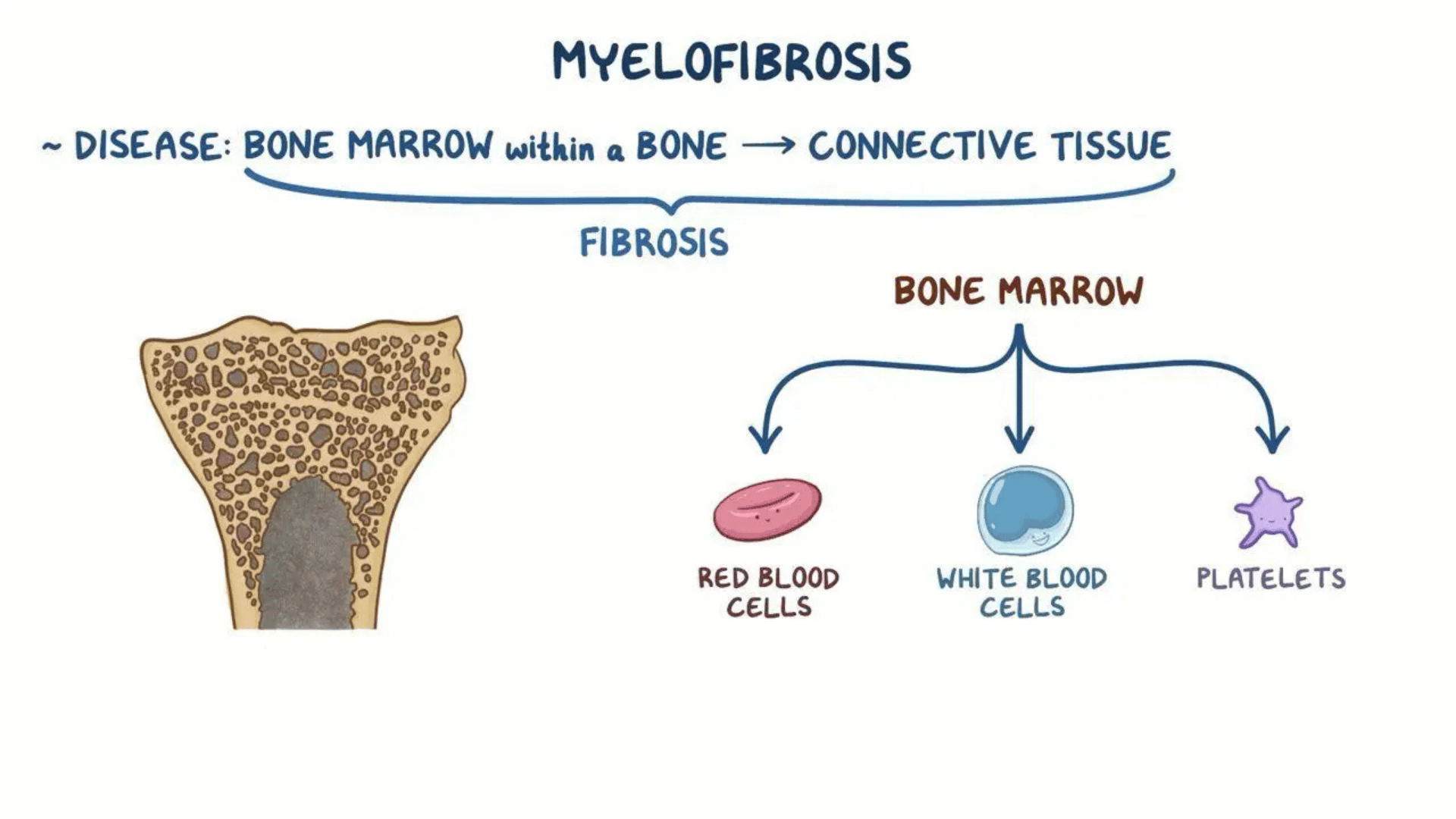
What is Myelofibrosis?
Myelofibrosis is a rare type of chronic leukemia that affects the bone marrow, disrupting normal blood cell production. It leads to scar tissue (fibrosis) forming in the marrow, which interferes with the body’s ability to produce red blood cells, white blood cells, and platelets. Over time, the spleen and liver may enlarge as they try to take over blood cell production.
Symptoms of Myelofibrosis
Symptoms develop slowly and may worsen over time. Common signs include:
- Fatigue and weakness (due to anemia)
- Easy bruising or bleeding
- Bone pain or tenderness
- Night sweats and fever
- Enlarged spleen (causing a feeling of fullness or discomfort)
- Unexplained weight loss
Potential Causes for Myelofibrosis
Myelofibrosis often occurs due to genetic mutations, particularly in the JAK2, CALR, or MPL genes. It can also develop as a progression from other blood disorders, such as polycythemia vera or essential thrombocythemia.
Who is at Risk for Myelofibrosis?
- Adults over 50
- People with other myeloproliferative neoplasms
- Individuals with certain gene mutations (JAK2, MPL, CALR)
- People exposed to radiation or toxic chemicals
Risk Reduction or Preventative Measures for Myelofibrosis
While myelofibrosis can’t always be prevented, you can lower your risk or support early detection by:
- Avoiding exposure to harmful chemicals and radiation
- Managing related blood disorders proactively
- Maintaining a healthy immune system
- Eating a nutrient-rich diet (B12, folate, iron)
- Having regular blood tests and check-ups—especially if you’re over 50 or have a family history of blood disorders
- Early detection and lifestyle awareness play a key role in managing long-term health.
Potential Course of Treatment for Myelofibrosis
There is no cure, but several treatments can manage symptoms and improve quality of life:
- JAK inhibitors (e.g., Ruxolitinib) to reduce spleen size and inflammation
- Blood transfusions for anemia
- Stem cell transplant in eligible patients
- Medications to stimulate blood production or reduce fibrosis
- Symptom management (pain control, treating infections, etc.)
CareMVP MRI Role in Diagnosing Myelofibrosis
At CareMVP, we play a crucial role in:
- Identifying early signs through routine blood work
- Coordinating bone marrow evaluations when necessary
- Providing access to genetic testing
- Referring patients to hematology and oncology specialists
- Supporting patients through treatment, education, and ongoing care