
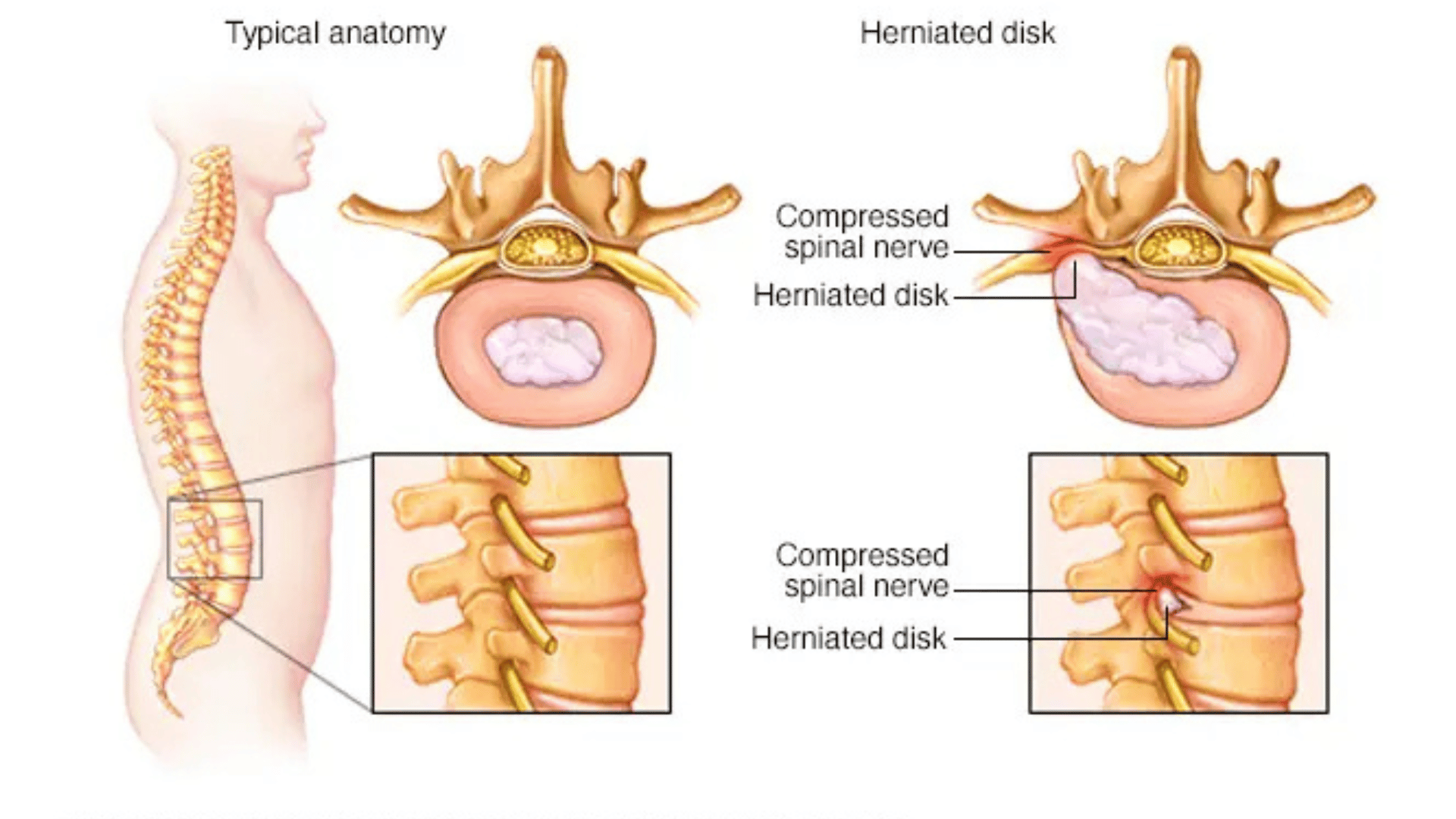
What is a Herniated Disc?
A herniated disc (also called a slipped disc, ruptured disc, or disc prolapse) occurs when the soft inner gel-like center of a spinal disc (nucleus pulposus) pushes out through a tear or weakness in the tougher outer layer (annulus fibrosus). This can irritate or compress nearby spinal nerves, leading to pain and other symptoms.
Symptoms
Symptoms depend on the location and severity of the herniation, but common ones include:
- Localized pain in the neck or lower back
- Radiating pain (sciatica) that travels down the arm or leg
- Numbness or tingling in the limbs
- Muscle weakness in the affected area
- Loss of reflexes
- In severe cases, loss of bladder or bowel control (a medical emergency – cauda equina syndrome)
Potential Causes
- Age-related disc degeneration (most common cause)
- Improper lifting technique
- Repetitive strenuous activities
- Trauma or injury (e.g., car accidents, falls)
- Excess weight putting pressure on the spine
- Genetic predisposition
Who is at Risk?
- Adults aged 30–50
- People with physically demanding jobs
- Those with sedentary lifestyles
- Smokers (reduced oxygen to discs can cause degeneration)
- Individuals who are overweight or obese
- People with a family history of spine problems
Risk Reduction or Preventative Measures
- Maintain a healthy weight
- Exercise regularly, especially core-strengthening activities
- Use proper posture when sitting, standing, or lifting
- Avoid prolonged sitting or poor ergonomic positions
- Quit smoking
- Lift properly (use legs, not back)
- Use ergonomic furniture and lumbar support if needed
Potential Course of Treatment
Conservative (non-surgical) treatments
- Rest and activity modification
- Physical therapy (stretching, strengthening, posture correction)
- Pain management (NSAIDs, muscle relaxants, corticosteroid injections)
- Heat or ice therapy
- Chiropractic care or acupuncture (in some cases)
Surgical options (if symptoms persist or worsen)
- Discectomy (removal of the herniated portion)
- Laminectomy (removing part of vertebra to relieve pressure)
- Spinal fusion (in some cases of severe degeneration)
CareMVP MRI Role in Diagnosing a Herniated Disc
Magnetic Resonance Imaging (MRI) is the gold standard for diagnosing a herniated disc. It provides:
- Detailed images of soft tissues, including discs and nerves
- Visualization of the extent and location of the herniation
- Identification of nerve compression
- Helps rule out other conditions (tumors, infections, spinal stenosis)
MRI is especially important when:
- Symptoms are severe or worsening
- Conservative treatment isn’t effective after several weeks
- Surgical intervention is being considered