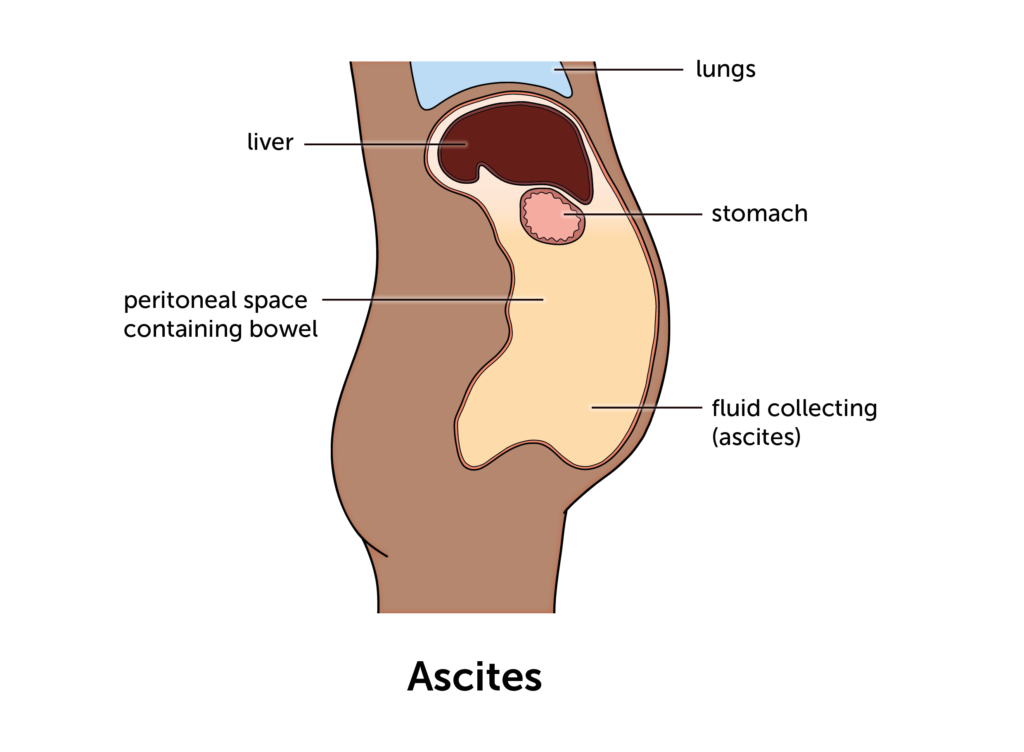
What Are Ascites?
Ascites is the abnormal accumulation of fluid in the abdominal cavity, leading to abdominal swelling and discomfort. It often signals underlying liver, heart, kidney, or malignancy-related disease.
Symptoms of Ascites
- Abdominal distension and bloating
- Feeling of heaviness or fullness in the abdomen
- Rapid weight gain
- Shortness of breath (due to pressure on the diaphragm)
- Loss of appetite and indigestion
- Swelling in the legs (peripheral edema)
Potential Causes of Ascites
- Liver cirrhosis (most common cause)
- Heart failure
- Kidney failure/nephrotic syndrome
- Cancer (peritoneal carcinomatosis)
- Infections such as tuberculosis
- Pancreatitis
Who is at Risk for Ascites?
- Patients with chronic liver disease or cirrhosis
- Individuals with heart or kidney failure
- People with abdominal or metastatic cancers
- Those with history of peritoneal infections
Risk Reduction or Preventative Measures for an Ascites
- Manage and treat liver disease early
- Control heart and kidney disease
- Limit salt intake to reduce fluid retentio
- Avoid alcohol consumption in liver disease
- Regular monitoring for complications in high-risk patients
Potential Course of Treatment for Ascites
- Dietary sodium restriction
- Diuretics to reduce fluid accumulation
- Paracentesis (needle drainage) for large or symptomatic ascites
- Treat underlying cause (e.g., antiviral therapy for hepatitis)
- In refractory cases, procedures like TIPS (transjugular intrahepatic portosystemic shunt) may be considered
CareMVP MRI's Role in Diagnosing Ascites
- Ultrasound imaging to detect and quantify fluid
- Guided paracentesis for diagnosis and symptom relief
- Laboratory analysis of ascitic fluid to determine the cause
- Follow-up imaging to monitor treatment response